Understanding 5G Home Internet: A Comprehensive 1000-Word Analysis
Is it time to cut the cord with your cable company? We dissect the technology, speeds, limitations, and hardware requirements of 5G Home Internet.
Telecommunications Specialist
Contributor & Technical Writer
The Shift Away from Cable Internet
In this article, we analyze the core concepts of 5G home internet to help you build a reliable, high-performance home system. As a result, for decades, consumers have been locked into monopolies held by local cable and DSL providers. However, laying physical copper or fiber optic lines in the ground is prohibitively expensive, meaning true competition in the broadband space has been scarce. However, the advent of 5G cellular technology has radically altered this dynamic. In addition, cellular carriers are now leveraging their massive networks of towers to beam high-speed internet directly into homes through the air, bypassing the need for physical underground infrastructure entirely. Meanwhile, this technology is known as Fixed Wireless Access (FWA), or 5G Home Internet.
This 1000-word comprehensive guide will analyze exactly how this technology works, the hardware you need to utilize it, its performance compared to traditional fiber optics, and whether it is the right choice to power the electronics in your home. Consequently, managing 5G home internet is critical for achieving optimal speeds.

How 5G Home Internet and Fixed Wireless Access (FWA) Works
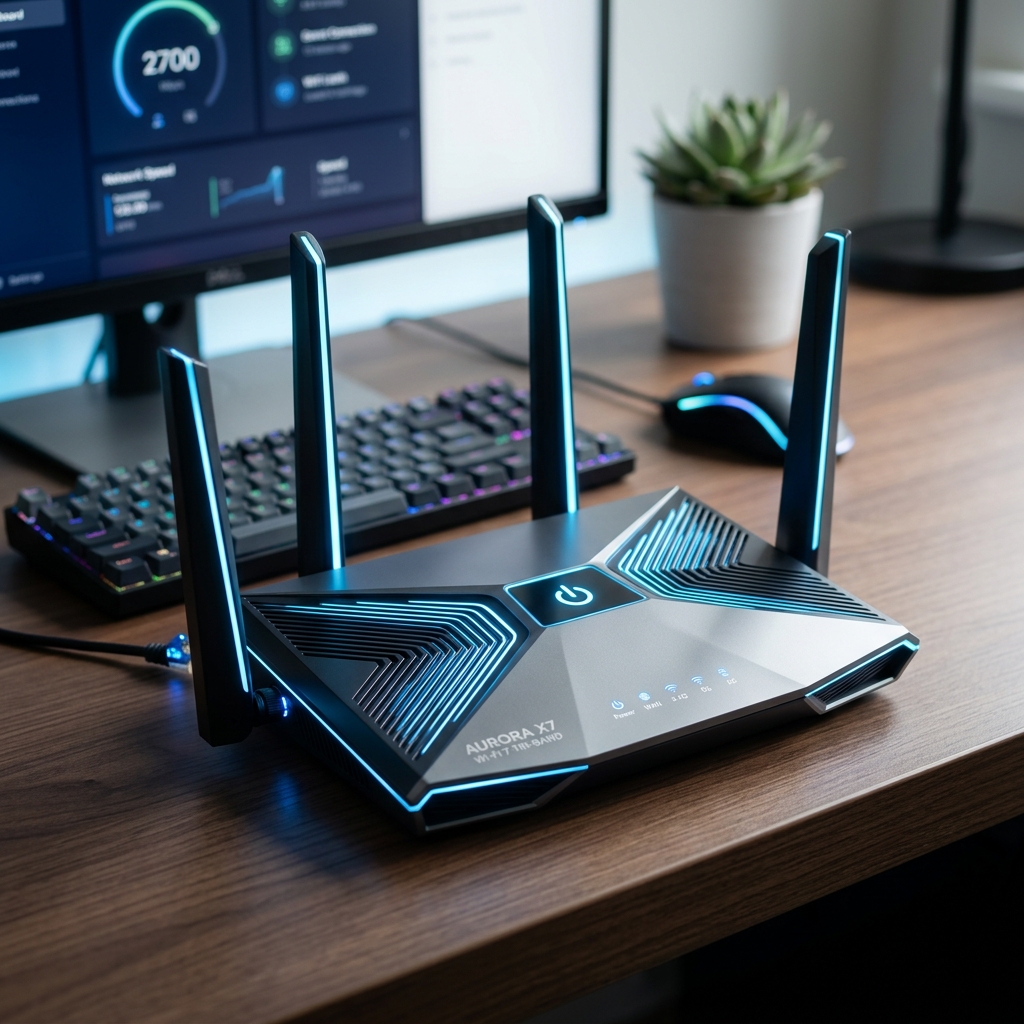
Traditional internet relies on a physical cable running from the street directly into a modem inside your house. 5G Home Internet replaces that final stretch of cable with high-frequency radio waves. Furthermore, when you sign up for 5G Home Internet, the provider sends you a single, monolithic device that acts as both the cellular modem and the Wi-Fi router. Specifically, you place this device near a window facing the nearest cell tower.
This gateway device contains massive, highly sensitive antennas that catch the 5G signal from the tower. Therefore, it decodes this cellular data and immediately rebroadcasts it throughout your house as a standard Wi-Fi signal. Additionally, to your smartphone, laptop, and smart electronics, it looks and acts exactly like traditional Wi-Fi; they have no idea the data arrived via a cellular tower.
The Three Tiers of 5G: Low, Mid, and High Band
To truly understand the performance you will receive, you must understand that "5G" is not a single speed; it is an umbrella term encompassing three distinct spectrums of radio frequencies. Consequently, your experience will vary wildly depending on which spectrum reaches your house.
1. Low-Band (Sub-6 GHz)
Low-band 5G travels massive distances and easily penetrates walls and buildings. Meanwhile, it is the foundation of nationwide 5G coverage. However, its speeds are only slightly faster than advanced 4G LTE, typically ranging from 50 to 200 Mbps. Subsequently, it provides reliable connectivity for basic electronics and streaming, but won't rival fiber optics.
2. Mid-Band (C-Band)
Mid-band is the "Goldilocks" spectrum. However, it offers a perfect balance, traveling a reasonable distance while delivering fantastic speeds, often between 300 to 600 Mbps. In addition, as carriers heavily deploy C-Band towers across suburban areas, this spectrum is making 5G Home Internet a massive threat to traditional cable companies.
3. High-Band (Millimeter Wave / mmWave)
This is the hyper-fast 5G that carriers advertise in commercials, capable of delivering multi-gigabit speeds (1,000 to 3,000 Mbps) with near-zero latency. Specifically, the massive caveat is that mmWave signals cannot travel far (often less than a mile) and are easily blocked by trees, rain, and the walls of your house. As a result, to utilize mmWave for home internet, your gateway device usually requires an external antenna mounted on the outside of your roof with a direct, unobstructed line of sight to the tower.

The Vulnerabilities of 5G Home Internet
While the prospect of cutting the cord is appealing, 5G Home Internet is not without its significant drawbacks. Because it relies on wireless transmission over the air, it is susceptible to physical and environmental interference.
Network Deprioritization: Cellular towers have limited total bandwidth. Additionally, during times of massive network congestion (e.g., a massive sporting event nearby), cellular carriers will always prioritize data going to mobile smartphones over data going to Fixed Wireless Home Internet gateways. Furthermore, this means your home speeds could drastically throttle during peak hours.
Latency Instability: While 5G promises lower latency than 4G, it still struggles to match the rock-solid consistency of physical fiber optic cables. Therefore, for hardcore competitive gamers who rely on sub-20ms ping times, the slight "jitter" (fluctuation in latency) inherent in cellular networks can be incredibly frustrating.
Frequently Asked Questions (FAQ)
Q: Can I use my own high-end Wi-Fi router with a 5G Home Internet plan?
A: Yes. Most 5G gateways provided by carriers have an Ethernet port and support "IP Passthrough" or "Bridge Mode". This allows you to disable the gateway's internal Wi-Fi broadcast and pass the raw internet connection directly to your premium Mesh Wi-Fi system to handle routing for your electronics.
Q: Will weather affect my 5G Home Internet speeds?
A: Heavy rain, dense fog, or thick snow can slightly degrade the high-frequency radio signals (especially mmWave) between the tower and your home, potentially causing minor speed reductions or latency spikes during severe storms.
Final Verdict: Should You Make the Switch?
If you are currently suffering from exorbitant prices and slow speeds from a monopoly cable provider, or if you live in a rural area where traditional broadband is unavailable, 5G Home Internet is a revolutionary, highly viable alternative that can comfortably power a modern suite of smart electronics. However, if your home is already wired with symmetric, gigabit fiber-optic internet (like Google Fiber or AT&T Fiber), physical cables remain the undisputed king of reliability, speed, and latency.
To learn more about related technologies, check out our guide on Starlink vs 5G Home Internet. Consequently, for additional industry resources and guidelines, visit the official FCC Broadband Guide.
Share this guide